

Try This Free Tool for Students
Attendance, CGPA, Percentage और Study Planner जैसे useful tools एक जगह देखें।
Choosing a health insurance plan is only half the job done — understanding what it will actually cost you is where most buyers get stuck. If you’re evaluating HDFC Ergo, one of India’s largest private health insurers, the premium chart is the single most useful tool to understand pricing before you commit.
In this guide, we break down exactly how HDFC Ergo calculates premiums, what factors move the price up or down, and how to read a premium chart correctly — so you don’t end up overpaying or underinsuring yourself.
What Is an HDFC Ergo Health Insurance Premium Chart?
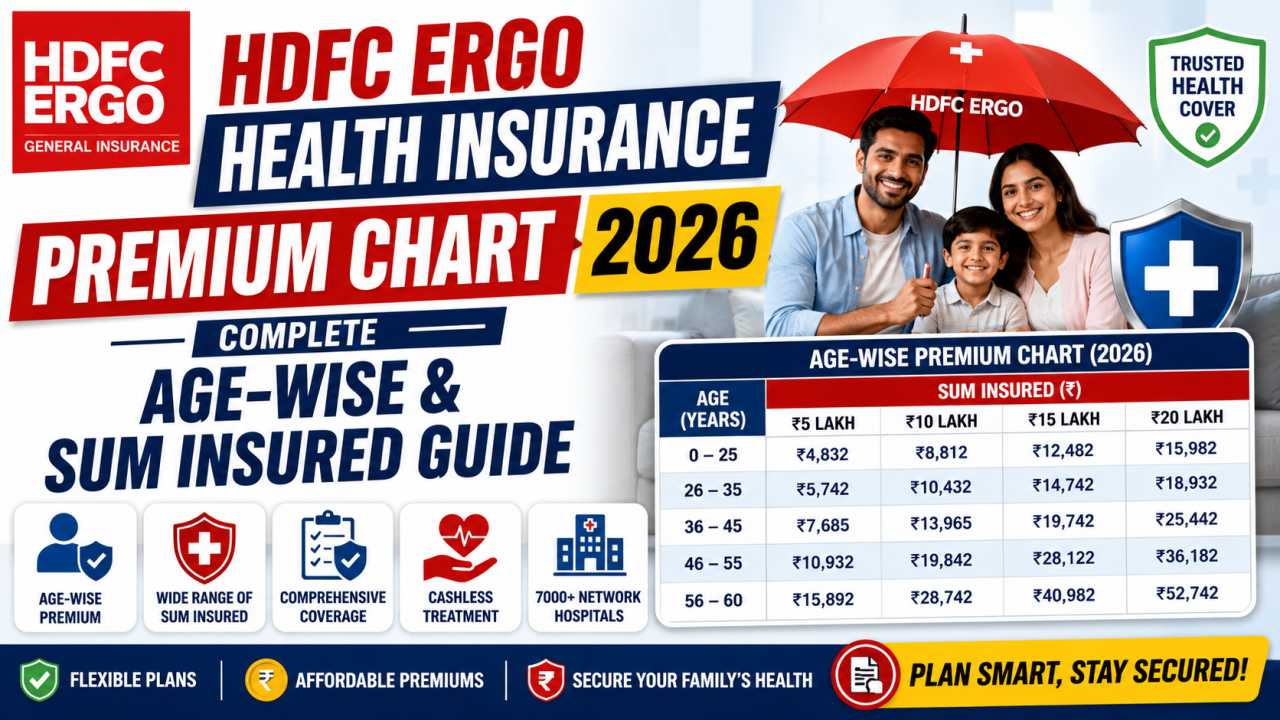
A premium chart is a rate table published by the insurer that shows how much you’ll pay annually based on a combination of factors — primarily your age, the sum insured you choose, your city/zone, and the number of family members covered. HDFC Ergo publishes these charts as part of the policy prospectus for each of its plans, such as Optima Secure and Optima Restore.
Think of it as a price menu: instead of getting a quote one plan at a time, you can scan the chart and instantly compare what a ₹5 lakh cover costs versus a ₹15 lakh or ₹1 crore cover, at your age bracket.
कौन हैं प्रल्हाद जोशी? धर्मेंद्र प्रधान के इस्तीफे के बाद बने नए शिक्षा मंत्री
Key Factors That Affect Your HDFC Ergo Premium

Before looking at any chart, it helps to understand why the numbers change the way they do:
1. Age of the insured Premiums rise with age because health risk increases. The jump is usually gradual up to age 45, then accelerates noticeably after 50 and again after 60.
2. Sum insured Higher coverage means a higher premium, but not proportionally — moving from ₹5 lakh to ₹10 lakh cover often costs far less than double, making higher sum insured options better value per rupee of coverage.
3. Policy type: Individual vs. Family Floater A family floater plan covers all members under one shared sum insured and is usually cheaper overall than buying individual policies for each family member — provided the family isn’t heavily skewed toward older members.
4. City or zone HDFC Ergo, like most insurers, uses a tier-based (zone-wise) pricing system. Metro cities (Tier 1) typically attract higher premiums than Tier 2 or Tier 3 towns because healthcare costs are higher in metros.
5. Add-ons and riders Optional covers — such as a Critical Illness rider, Hospital Daily Cash, or the Unlimited Restore benefit — add to the base premium but can significantly widen your protection.
6. Medical history and pre-existing conditions If you’re switching from another insurer (porting) or have declared pre-existing conditions, underwriting loading charges may apply on top of the base premium.
7. Policy tenure Opting for a 2-year or 3-year policy instead of a 1-year term often works out cheaper annually, since insurers offer long-term discounts.
पहले ही दिन इस्तीफा देने को तैयार थे प्रधान, BJP नेता का बड़ा दावा
How to Read an HDFC Ergo Premium Chart
Most HDFC Ergo premium charts are structured in a grid format:
| Sum Insured | Age 18–35 | Age 36–45 | Age 46–55 | Age 56–65 | Age 65+ |
|---|---|---|---|---|---|
| ₹5 Lakh | Lower band | Slightly higher | Moderate | Higher | Highest |
| ₹10 Lakh | Lower band | Slightly higher | Moderate | Higher | Highest |
| ₹25 Lakh | Lower band | Slightly higher | Moderate | Higher | Highest |
| ₹50 Lakh–₹1 Crore | Lower band | Slightly higher | Moderate | Higher | Highest |
Note: Actual premium figures vary by plan (Optima Secure, Optima Restore, my:health Suraksha, etc.), city/zone, and any applicable GST or loading. This table illustrates the pattern of how premiums scale — for exact current figures, always check HDFC Ergo’s official premium chart PDF or use their online premium calculator, since rates are revised periodically by the insurer.
Why You Shouldn’t Rely on Approximate Numbers Alone

Health insurance is a long-term financial commitment, and even a small difference in premium compounds over years of renewal. Because HDFC Ergo revises its rate charts periodically (and rates differ across specific plans like Optima Secure vs. Optima Restore vs. group/floater options), the safest approach is:
- Use the official HDFC Ergo premium calculator on their website — it factors in your exact age, city, sum insured, and add-ons.
- Download the current prospectus/rate chart PDF for the specific plan you’re considering, since each product has its own pricing table.
- Get a quote confirmed in writing before finalizing, as final premiums can include underwriting loading based on your medical declaration.
शिक्षा मंत्री धर्मेंद्र प्रधान का इस्तीफा: ‘Cockroach Protests’ के आगे झुकी Modi Government
HDFC Ergo Popular Health Plans at a Glance
| Plan Name | Best Suited For | Key Highlight |
|---|---|---|
| Optima Secure | Those wanting cover that grows automatically | Base cover can multiply up to 4X without extra premium in claim-free years |
| Optima Restore | Families wanting unlimited restoration of sum insured | Restores full sum insured even for the same illness, multiple times a year |
| my:health Suraksha | Budget-conscious individual buyers | Straightforward individual cover with essential benefits |
| my:health Woman Suraksha | Women seeking maternity and women-specific cover | Add-on benefits tailored to women’s health needs |
Tips to Lower Your HDFC Ergo Premium
- Buy early: Locking in a policy at a younger age means lower base premiums and fewer pre-existing condition exclusions.
- Choose a family floater if your family members are relatively close in age and generally healthy.
- Opt for a longer tenure (2–3 years) to benefit from multi-year discounts.
- Maintain a claim-free record — many HDFC Ergo plans offer no-claim bonus in the form of increased cover or reduced premium.
- Compare add-ons carefully — only pick riders you’re likely to actually use, since each one adds to the annual cost.
- Check for existing-policyholder discounts — HDFC Ergo often offers a discount on the base premium if you already hold another active retail policy (motor, travel, home, etc.) with them.
Frequently Asked Questions
Does the HDFC Ergo premium chart include GST? Most published rate charts show the base premium separately from GST (18% is applicable on health insurance premiums in India). Always check whether the number you’re viewing is inclusive or exclusive of tax.
Can I get the exact premium chart PDF from HDFC Ergo? Yes. HDFC Ergo publishes plan-wise rate charts in the policy prospectus, available for download on their official website for each specific product.
Why do premiums increase sharply after age 50? Actuarially, the likelihood and cost of hospitalization claims rises significantly after 50, so insurers price this risk into the premium — this is standard across the industry, not specific to HDFC Ergo.
Is a family floater always cheaper than individual policies? Generally yes, but if one family member is significantly older than the rest, an individual policy for that person combined with a floater for the others can sometimes work out more economical.
Final Word
An HDFC Ergo premium chart gives you a quick sense of how age, sum insured, and city affect your health insurance cost — but it’s a starting point, not the final word. Because exact rates vary by plan and are updated periodically, always cross-check with HDFC Ergo’s official calculator or the latest rate chart PDF before making a buying decision. A well-chosen plan today can save you both money and stress during a medical emergency years down the line.
Disclaimer: This article is for informational purposes only and does not constitute financial or insurance advice. Premium figures and plan features are subject to change; please verify current rates and terms directly with HDFC Ergo or a licensed insurance advisor before purchasing a policy.
